 English
 Español
  Português
  русский
  Français
  日本語
日本語  Deutsch
  tiếng Việt
  Italiano
  Nederlands
  ภาษาไทย
  Polski
  한국어
한국어  Svenska
  magyar
  Malay
Malay  বাংলা ভাষার
  Dansk
Dansk  Suomi
Suomi  हिन्दी
  Pilipino
  Türkçe
  Gaeilge
  العربية
  Indonesia
  Norsk
Norsk  تمل
تمل  český
český  ελληνικά
  український
  Javanese
  فارسی
فارسی  தமிழ்
தமிழ்  తెలుగు
  नेपाली
  Burmese
  български
  ລາວ
ລາວ  Latine
  Қазақша
  Euskal
  Azərbaycan
  Slovenský jazyk
  Македонски
  Lietuvos
  Eesti Keel
  Română
  Slovenski
  मराठी
मराठी  Srpski језик

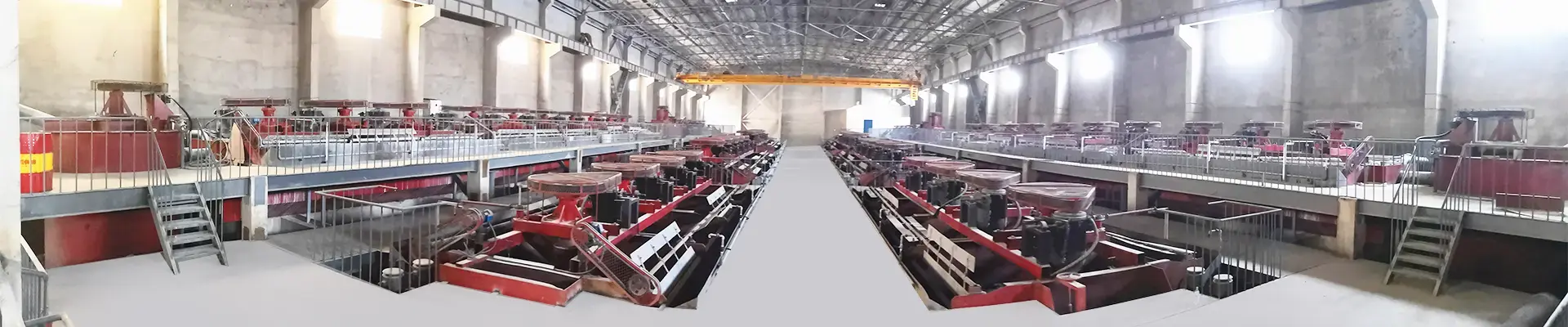
How Do Flotation Cells Improve Mineral Recovery?
If your plant is fighting unstable froth, rising reagent costs, or a concentrate grade that swings from shift to shift, the problem often isn’t “flotation” in general—it’s how the Flotation Cells are selected, configured, and operated for your ore. Flotation is a deceptively practical process: when it works well, it feels easy; when it doesn’t, it can quietly drain recovery, throughput, and confidence.
Abstract
Flotation Cells separate valuable minerals from gangue by attaching hydrophobic particles to air bubbles and transporting them into a froth concentrate. The pain points are consistent across many sites: poor recovery of fines, unstable froth, high reagent consumption, short equipment uptime, and difficulty translating lab results to full-scale circuits. This article explains how flotation cells work, how to choose a cell type and circuit layout, which operating variables matter most, and how to diagnose symptoms like dropping recovery, dirty concentrate, and sanding. You’ll also find practical checklists, comparison tables, and an FAQ designed for engineers and operations teams who need steady performance—not theory.
Table of Contents
- What Problems Do Flotation Cells Solve?
- What’s Actually Happening Inside a Flotation Cell?
- How Do You Choose the Right Flotation Cell?
- Which Operating Variables Matter Most?
- Troubleshooting Guide for Common Plant Symptoms
- Maintenance and Reliability Playbook
- How Should You Evaluate Flotation Performance?
- Where Can a Supplier Add Real Value?
- FAQ
- Next Steps
Outline
- Define the pain points: recovery, grade, cost, and stability issues tied to flotation cell choices.
- Explain the mechanism: bubble–particle attachment, collision probability, and froth transport in plain language.
- Selection framework: match cell type and size to ore characteristics and production goals.
- Operating levers: airflow, agitation, pulp level, froth depth, and reagent strategy.
- Diagnosis tools: symptom → likely causes → field fixes you can test fast.
- Reliability plan: wear parts, sanding control, inspections, and spare strategy.
- Performance metrics: what to track daily to prevent “mystery losses.”
- Implementation path: how a capable supplier supports commissioning, training, and optimization.
What Problems Do Flotation Cells Solve?
At its core, flotation is a selective separation method. But most sites don’t struggle with the concept—they struggle with the economics of inconsistency. Well-applied flotation cells can solve problems such as:
- Low recovery at target grind: valuables stay in tailings, especially fines or partially liberated particles.
- Dirty concentrate: grade drops due to entrainment, excess froth water, or overly aggressive air/agitation.
- High reagent consumption: operators “dose their way out” of instability instead of fixing the root cause.
- Unstable froth and frequent upsets: changing ore mineralogy, sliming clays, or poor air distribution.
- Downtime and sanding: solids settle, impellers wear, air lines plug, and performance slowly collapses.
Reality check: If your circuit only performs well on “good ore days,” you don’t have a flotation process—you have a lottery ticket. The goal is stable recovery and grade across normal feed variability.
What’s Actually Happening Inside a Flotation Cell?
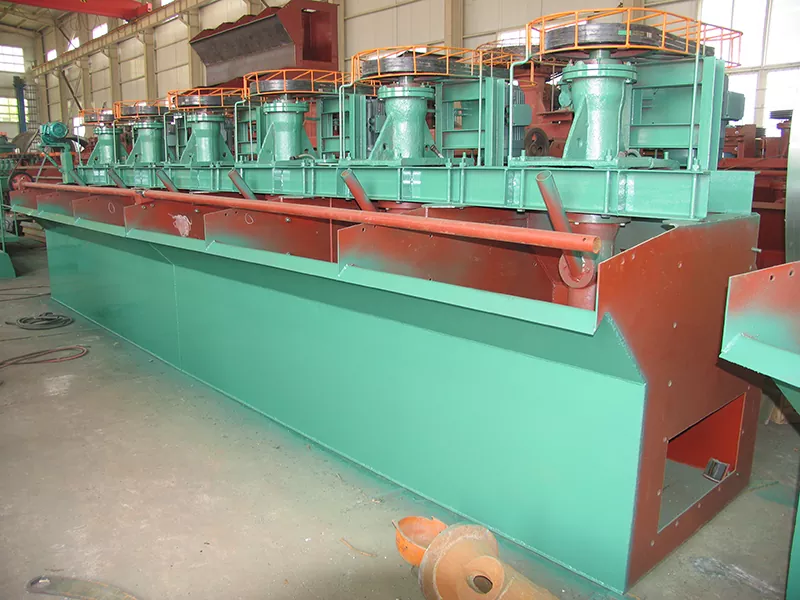
A flotation cell is a controlled mixing-and-separation environment. The “win condition” is getting valuable mineral particles to meet bubbles, attach, and survive long enough to reach the froth layer—while keeping unwanted gangue from hitching a ride.
In practical terms, performance comes down to three probabilities:
- Collision: particles and bubbles must physically meet (mixing and bubble size matter).
- Attachment: the mineral surface must be sufficiently hydrophobic (reagents, pH, and oxidation matter).
- Transport: attached particles must reach and stay in the froth (froth depth, drainage, and stability matter).
That’s why two plants can run “the same reagent scheme” and get wildly different results: their air rates, mixing intensity, cell geometry, and froth handling create different collision/attachment/transport outcomes.
How Do You Choose the Right Flotation Cell?
Selection is not just a catalog decision. It’s a match between ore behavior, circuit duty (rougher vs. cleaner), and the operating window your team can realistically hold day after day.
| Cell Approach | Best Fit | Typical Strength | Watch Outs |
|---|---|---|---|
| Mechanical (agitated) cells | Wide range of ore types and duties | Robust mixing, flexible control, common plant standard | Can be energy-intensive; aggressive mixing may increase entrainment if not tuned |
| Column flotation | Cleaning/scavenging with fine particles | High selectivity, good grade potential, lower turbulence | Needs stable feed and careful froth washing; not ideal for highly variable slurries |
| Pneumatic/forced-air variants | Specific circuits needing high air dispersion | Strong bubble generation and dispersion control | Air quality and distribution become critical; plugging/maintenance can spike |
Beyond type, sizing and layout matter. A high-level checklist that usually prevents expensive missteps:
- Define your primary goal: recovery, grade, or throughput (pick one to prioritize first).
- Characterize the ore: liberation, fines content, clays, oxidation, and mineral associations.
- Choose circuit duties: rougher–scavenger–cleaner steps and recirculation points.
- Confirm target residence time and practical air rate range for the duty.
- Plan for variability: what happens on your “worst normal day” of ore?
- Validate maintainability: wear parts access, lift points, spares lead time, and training.
Tip: If your ore contains significant fines or sliming clays, prioritize designs and operating practices that control entrainment (froth depth, drainage time, froth washing where appropriate, and stable air distribution).
Which Operating Variables Matter Most?
Operators often adjust “whatever is available” (usually reagents) because it’s the easiest lever. But the biggest wins usually come from controlling the physical environment first:
- Air rate: too low starves bubble surface area; too high can flood the froth and drag gangue into concentrate.
- Bubble size and dispersion: smaller, well-dispersed bubbles improve collision probability—up to a point.
- Agitation/mixing intensity: needed for suspension and collisions, but excessive turbulence can detach particles and increase entrainment.
- Pulp level and froth depth: deeper froth can improve cleaning via drainage, but may lose recovery if too deep or unstable.
- Feed solids percentage: affects viscosity, gas hold-up, and froth behavior; extremes often destabilize performance.
- pH and water quality: impacts mineral surface chemistry and froth stability; recycled water can change everything.
- Reagent regime: collectors, frothers, depressants must match mineralogy; “more” is not the same as “better.”
A practical way to think about control: stabilize air + level + froth depth first, then tune mixing, then optimize reagents. If the physical environment is unstable, reagent optimization becomes guesswork.
Troubleshooting Guide for Common Plant Symptoms
| Symptom | Likely Causes | Fast Tests and Fixes |
|---|---|---|
| Recovery suddenly drops | Air starvation, blocked spargers/air lines, pH drift, feed grade shift, oxidation changes | Verify airflow and pressure; check pH and dosing pumps; inspect air distribution; run a short air-step test |
| Concentrate grade gets dirty | Excess entrainment, shallow froth, too much air, over-frothing, high fines/clays | Increase froth depth; reduce air slightly; review frother dose; adjust wash (if applicable); tighten level control |
| Froth collapses or becomes “watery” | Water chemistry change, low frother, oil/grease contamination, unstable air delivery | Check recycle water and contaminants; confirm frother quality/dose; stabilize air; confirm impeller condition |
| Sanding / solids settle in the tank | Insufficient agitation, high density, worn impeller/stator, poor startup procedure | Increase mixing within safe limits; correct solids %; inspect wear parts; revise startup and shutdown routines |
| Reagent consumption climbs with no benefit | Trying to solve a physical control problem with chemistry; poor mixing of reagents; wrong addition point | Stabilize air/level first; verify reagent make-up and mixing; trial alternate addition points and conditioning time |
Field habit that pays off: change one variable at a time and hold it long enough to see the effect. Fast, simultaneous adjustments make root causes invisible—and turn every upset into a “mystery.”
Maintenance and Reliability Playbook
Flotation performance often degrades slowly until someone notices tailings grade creeping up. A simple reliability rhythm prevents that silent loss:
- Daily: check airflow stability, froth appearance, level control response, and abnormal vibration/noise.
- Weekly: inspect air lines for moisture/plugging, review reagent dosing calibration, verify density measurements.
- Monthly: inspect impeller/stator wear, check liners, confirm motor performance, and audit instrument drift.
- Per shutdown: clean air distribution components, verify clearances, and replace wear parts proactively.
The payoff isn’t just fewer breakdowns—it’s consistent hydrodynamics. Worn internals change bubble dispersion and turbulence, which changes grade and recovery even when your control screen looks “normal.”
How Should You Evaluate Flotation Performance?

To keep flotation from becoming a “black box,” track a small set of metrics consistently and review them together:
- Recovery and grade by circuit duty: rougher, scavenger, cleaner—don’t average away the truth.
- Mass pull: a leading indicator for entrainment and reagent/froth issues.
- Air rate and froth depth trends: stability matters more than any single setpoint.
- Tailings grade drift: catching gradual increases early saves months of lost metal.
- Downtime vs. lost recovery: quantify the cost of instability to justify fixes and spares.
Practical insight: If operators can’t connect a change (air, froth depth, solids %) to a measured outcome (mass pull, grade, recovery), the plant will default to “reagent chasing.” Build that cause-and-effect muscle.
Where Can a Supplier Add Real Value?
A flotation cell isn’t just a piece of steel—it’s a process environment. The best supplier support looks like: sizing that matches your ore, commissioning that stabilizes controls early, and practical training that helps your team diagnose issues without guesswork.
Qingdao EPIC Mining Machinery Co.,Ltd. supports flotation projects with an engineering-first approach: matching Flotation Cells to ore characteristics and circuit duties, helping define operating windows (air, level, froth depth), and providing guidance for commissioning and routine optimization. The goal is straightforward: reduce performance swings, improve recovery where it matters, and keep maintenance predictable.
FAQ
Q: What is the most common reason flotation cells underperform after installation?
A: Unstable operating conditions—especially airflow and level control—combined with ore variability. Many plants try to compensate with reagents instead of stabilizing the physical environment first.
Q: Can I fix low recovery by increasing air rate?
A: Sometimes, but it’s not automatic. More air can increase bubble surface area, yet it can also increase entrainment and reduce grade. The safer approach is to step-test air rate while watching mass pull, grade, and froth behavior.
Q: Why does concentrate grade drop when feed gets finer?
A: Fine particles are easier to carry into froth water without true attachment (entrainment). Deeper froth, better drainage control, and disciplined air/frother settings usually help.
Q: How do I know if sanding is starting before it becomes a shutdown?
A: Watch for increasing torque, reduced mixing response, changing froth texture, and “dead zones” visible in the tank. Regular inspection of wear parts and density control reduces the risk dramatically.
Q: What should I standardize first for more stable flotation results?
A: Air delivery consistency, pulp level control, and froth depth targets. Once these are stable, reagent optimization becomes far more reliable.
Next Steps
If you’re dealing with unstable recovery, inconsistent concentrate grade, or rising reagent costs, the fastest path forward is usually a focused review of your Flotation Cells selection, circuit duty, and operating window—then a short, structured set of plant tests to confirm improvements.
Want practical recommendations tailored to your ore and targets? Contact us at Qingdao EPIC Mining Machinery Co.,Ltd. and share your feed characteristics, current circuit layout, and the main issue you want to fix first—we’ll help you turn flotation from “constant firefighting” into steady performance.
Send Inquiry



X
We use cookies to offer you a better browsing experience, analyze site traffic and personalize content. By using this site, you agree to our use of cookies.
Privacy Policy