 English
 Español
  Português
  русский
  Français
  日本語
日本語  Deutsch
  tiếng Việt
  Italiano
  Nederlands
  ภาษาไทย
  Polski
  한국어
한국어  Svenska
  magyar
  Malay
Malay  বাংলা ভাষার
  Dansk
Dansk  Suomi
Suomi  हिन्दी
  Pilipino
  Türkçe
  Gaeilge
  العربية
  Indonesia
  Norsk
Norsk  تمل
تمل  český
český  ελληνικά
  український
  Javanese
  فارسی
فارسی  தமிழ்
தமிழ்  తెలుగు
  नेपाली
  Burmese
  български
  ລາວ
ລາວ  Latine
  Қазақша
  Euskal
  Azərbaycan
  Slovenský jazyk
  Македонски
  Lietuvos
  Eesti Keel
  Română
  Slovenski
  मराठी
मराठी  Srpski језик

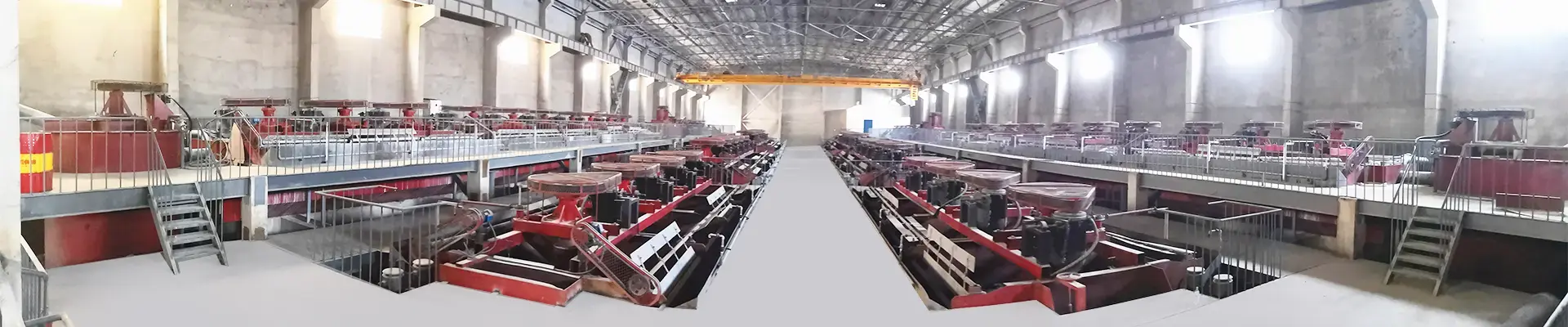
Why Your Grinding Mill Keeps Missing the Spec?
Abstract
A Grinding Mill is supposed to deliver a stable particle size, predictable throughput, and reasonable operating costs. Yet many plants fight the same loop: the product drifts out of spec, energy use creeps up, liners or media wear too fast, and unplanned downtime starts to define the schedule. This article breaks down the most common root causes—feed variability, incorrect mill selection, poor classification, worn internals, and overlooked process controls—and gives practical, field-ready steps to bring performance back under control. You’ll also find a decision checklist, a troubleshooting table, and a set of FAQs that procurement teams and plant managers typically ask before committing to a new line.
Table of Contents
- What pain points usually show up first?
- How do you choose the right mill type for your target?
- Why the “mill + classifier” system matters more than the mill alone
- Which controls stabilize product size and throughput?
- How do you reduce wear, dust, and unplanned downtime?
- Troubleshooting table you can use on the shop floor
- Procurement checklist before you sign
- FAQ
Outline
- Diagnose the top causes of out-of-spec grinding
- Match mill type to material behavior and fineness target
- Design the full circuit: feeding, grinding, classification, conveying
- Stabilize the process with simple but disciplined controls
- Cut costs with wear strategy, spares planning, and maintainability
What pain points usually show up first?
When a Grinding Mill is underperforming, plants rarely see a single clean symptom. Instead, you get a cluster:
- Particle size drift: D90 or residue rises, or the fines fraction fluctuates shift-to-shift.
- Throughput instability: Tons per hour looks good on Monday, collapses by Thursday.
- Energy inflation: kWh/t increases while product quality does not improve.
- Wear surprises: Liners, media, rings/rollers, or classifier components wear faster than budgeted.
- Dust and housekeeping: Leaks and negative pressure issues create safety and compliance headaches.
- Downtime that “feels random”: In reality it’s usually predictable wear + weak inspections.
Practical rule: If your fineness is unstable, don’t blame the mill first. Start with feed consistency and classification. In many circuits, the classifier is the hidden “quality gate” that determines whether out-of-spec material recirculates or escapes.
How do you choose the right mill type for your target?
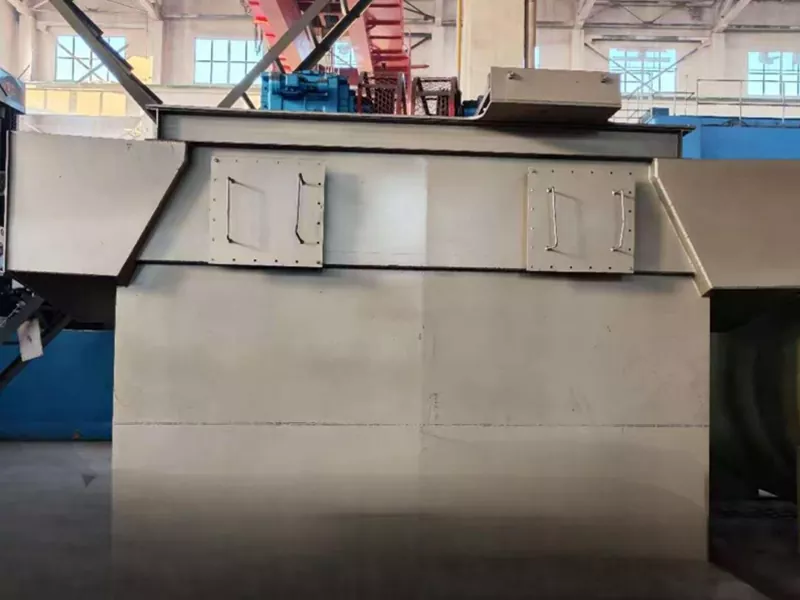
A Grinding Mill choice should start with the material—not the catalog. Hardness, abrasiveness, moisture, heat sensitivity, and the target distribution (not just “200 mesh”) will decide what works reliably. Below is a practical way to think about selection.
| Goal / Constraint | Often a better fit | Watch-outs |
|---|---|---|
| General powder grinding, flexible feed size | Ball mill or vertical roller style circuits (depending on fineness) | Media/liner wear, and classification match |
| Very fine / ultra-fine target with tight top cut | Stirred media or air classifying systems | Heat control, dust handling, classifier rotor wear |
| Moist or sticky material | Wet grinding circuit or pre-drying + controlled feed | Screening, plugging, and stable moisture management |
| Abrasive minerals with high wear cost sensitivity | Robust liners/media strategy + conservative speed/load | Over-aggressive settings can “buy” fineness using wear |
| Heat-sensitive products (softening, discoloration, volatilization) | Lower-energy intensity setups + temperature monitoring | Airflow tuning, insulation, and safe dust control |
Selection isn’t just “which machine.” It’s also: what feed size range is realistic, how you’ll handle moisture, and what “good” looks like for distribution (D50/D90, residue, or surface area). If a supplier only talks about final fineness, that’s a red flag—you need the full curve, not a single point.
Why the “mill + classifier” system matters more than the mill alone
Many buyers evaluate a Grinding Mill as a standalone purchase. But in day-to-day reality, your quality and cost are determined by the circuit: feeding, grinding, classification, conveying, and dust collection. The most common “it looked great on paper” failures happen when the interfaces are ignored.
- Feeding: If your feed rate surges, the mill load swings and your product size swings with it.
- Pre-processing: One oversized chunk can trigger vibration, imbalance, or a choke event.
- Classification: If the cut point drifts, you either recycle too much (wasting energy) or leak coarse product (missing spec).
- Conveying & dust: Poor sealing and pressure balance can turn minor leaks into major housekeeping and safety issues.
Quick diagnostic you can run this week:
- Log feed rate, mill power, classifier speed (or setting), and product fineness every hour for 3 shifts.
- If fineness tracks classifier setting more than mill power, your bottleneck is classification, not grinding.
- If fineness tracks feed spikes, fix feeding stability before changing liners/media.
Which controls stabilize product size and throughput?
You don’t need fancy automation to improve a Grinding Mill circuit. You need disciplined control of a few variables. Plants often gain the biggest improvement by making the process “boring”—repeatable and steady.
- Stable feed: Use a controlled feeder; avoid dumping material in batches.
- Moisture awareness: Measure moisture and don’t guess. A small rise can create plugging or a sudden drop in efficiency.
- Temperature monitoring: If product quality or safety is temperature-sensitive, treat temperature like a KPI.
- Classification discipline: Lock in rotor speed/airflow targets and only adjust one variable at a time.
- Sampling method: Inconsistent sampling creates “ghost problems.” Standardize where and when samples are taken.
If your team says: “We can’t hold spec because the ore changes.”
Try this: Build a simple “feed classes” playbook (easy/medium/hard grindability) with preset settings for each class.
If your team says: “Power looks normal but product is coarse.”
Try this: Inspect classifier wear and air leaks; a drifting cut point can mask itself as a grinding issue.
How do you reduce wear, dust, and unplanned downtime?
Wear and downtime are rarely “bad luck.” In a Grinding Mill environment, they’re usually the price of hidden instability: surging feed, wrong operating window, poor sealing, and delayed inspections.
- Operate in a safe window: Pushing speed/load beyond the stable range often buys fineness by burning liners and media.
- Plan wear like a process: Track wear rate per ton, not “time since last shutdown.” Ton-based planning is more accurate.
- Seal and balance airflow: Dust leaks are often pressure-balance problems, not “bad filters.” Fix the root cause.
- Keep critical spares: Classifier wear parts, seals, bearings, and sensors are cheap compared to a stuck line.
- Standardize inspection points: Same checkpoints, same frequency, same acceptance criteria.
This is where a supplier’s practical experience matters. Teams like Qingdao EPIC Mining Machinery Co.,Ltd. often support projects with material testing, circuit recommendations, and commissioning guidance—not just equipment delivery—so the line runs consistently after installation, not only on day one.
Troubleshooting table you can use on the shop floor
| Symptom | Likely cause | Fast checks | Fix direction |
|---|---|---|---|
| Product suddenly coarser, power unchanged | Classifier wear, air leak, cut point drift | Inspect rotor/vanes; check ducts and seals | Restore sealing; replace worn parts; stabilize airflow |
| High power, low throughput | Overloading, wrong media/liner condition, feed too coarse | Check feed size; inspect liners/media; verify load | Rebalance feed; correct internals; improve pre-crushing |
| Frequent plugging or build-up | Moisture, sticky material, low airflow, poor conveying | Measure moisture; inspect choke points; check pressure | Add drying/conditioning; tune airflow; redesign transfer points |
| Wear cost spikes | Operating too aggressively, abrasive feed, wrong material choice | Compare wear per ton; check hardness/abrasion index | Shift to stable window; upgrade wear parts; adjust classification |
| Dust issues around the line | Pressure imbalance, poor sealing, maintenance gaps | Smoke test for leaks; check negative pressure points | Fix sealing; rebalance fans/ducts; standardize inspections |
Procurement checklist before you sign
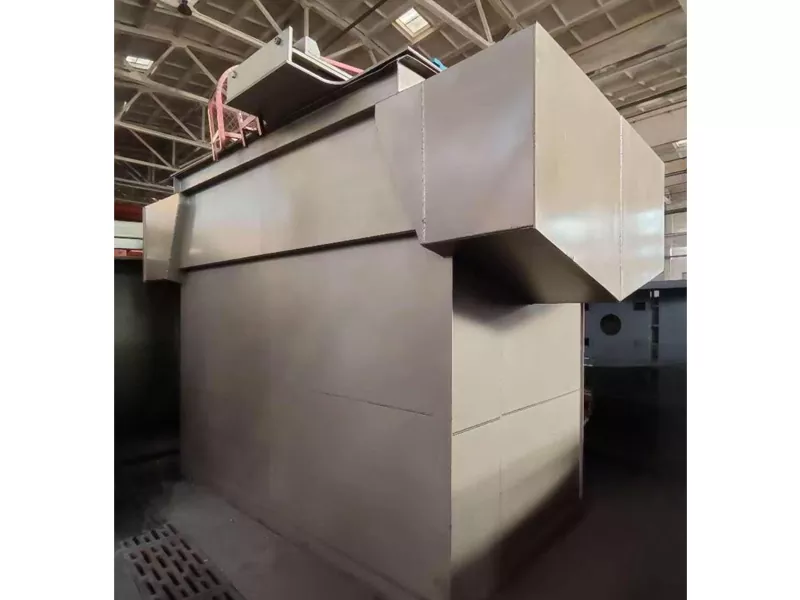
If you’re buying a Grinding Mill for a real plant (not a lab demo), the “best” option is the one that stays stable under real feed variation. Here’s a procurement-friendly checklist that prevents expensive surprises:
- Material data: feed size range, hardness/abrasiveness, moisture, and target distribution (D50/D90/residue).
- Performance definition: throughput at target spec, not “maximum throughput” with a vague quality claim.
- Circuit scope: feeder, classifier, dust collection, conveying, controls, and commissioning plan.
- Maintainability: liner/media replacement time, access panels, and safety interlocks.
- Spares strategy: critical parts list, lead time, and recommended on-site inventory.
- Acceptance test: agreed sampling method, test duration, and what counts as “pass.”
Tip: Ask your supplier to explain what they would adjust first if feed moisture rises by 2% or the feed gets 20% harder. The clarity of their answer tells you whether they’ve lived through real commissioning—not just sales proposals.
FAQ
Q: How do I know whether the issue is the mill or the classifier?
Track fineness against classifier setting and airflow (or cut-point controls) for several shifts. If fineness changes more with classifier changes than with mill power/load, classification is your primary lever.
Q: Why does my product meet spec sometimes, then fail on the next shift?
The most common reasons are feed surges, moisture drift, inconsistent sampling, and wear-related changes (especially on classifier components). Stabilizing feed and standardizing sampling often improves results faster than hardware changes.
Q: Is “finer” always better for downstream performance?
Not always. Some processes need a narrow top cut more than extreme fineness. Over-grinding can increase energy costs, create dust, and harm downstream handling. Define the distribution your process needs, then target it consistently.
Q: What’s the fastest way to reduce grinding cost per ton?
Reduce re-circulation of already-fine material and eliminate instability. In practice, this means better classification control, tighter sealing/air balance, and a feed strategy that avoids spikes.
Q: What should I provide to get a realistic equipment proposal?
Share representative material samples or reliable lab data, your target distribution, required throughput, operating hours, and constraints like dust limits, space, and utilities. The more concrete the data, the less you’ll pay later in retrofits.
Closing thoughts
A stable Grinding Mill line is not built on luck—it’s built on matching the mill type to material behavior, designing the full circuit, and running the process with consistent controls and disciplined maintenance. If you’re planning a new line or troubleshooting an existing one, treat the project as a system upgrade, not a single equipment purchase.
If you want a practical recommendation based on your material, target fineness, and throughput, Qingdao EPIC Mining Machinery Co.,Ltd. can help you map the circuit and define a clear acceptance plan.
Ready to stop guessing and start hitting spec consistently? contact us with your material details and production goals, and let’s turn your grinding line into something predictably profitable.
Send Inquiry



X
We use cookies to offer you a better browsing experience, analyze site traffic and personalize content. By using this site, you agree to our use of cookies.
Privacy Policy