 English
 Español
  Português
  русский
  Français
  日本語
日本語  Deutsch
  tiếng Việt
  Italiano
  Nederlands
  ภาษาไทย
  Polski
  한국어
한국어  Svenska
  magyar
  Malay
Malay  বাংলা ভাষার
  Dansk
Dansk  Suomi
Suomi  हिन्दी
  Pilipino
  Türkçe
  Gaeilge
  العربية
  Indonesia
  Norsk
Norsk  تمل
تمل  český
český  ελληνικά
  український
  Javanese
  فارسی
فارسی  தமிழ்
தமிழ்  తెలుగు
  नेपाली
  Burmese
  български
  ລາວ
ລາວ  Latine
  Қазақша
  Euskal
  Azərbaycan
  Slovenský jazyk
  Македонски
  Lietuvos
  Eesti Keel
  Română
  Slovenski
  मराठी
मराठी  Srpski језик

What Is a Submerged Spiral Classifier and How Does It Enhance Mineral Processing
Summary: The submerged spiral classifier is a vital component in mineral processing that enhances the separation and classification of particles in various industries. In this article, we will explore the function, advantages, and applications of submerged spiral classifiers, as well as how EPIC's solutions contribute to the mining industry.
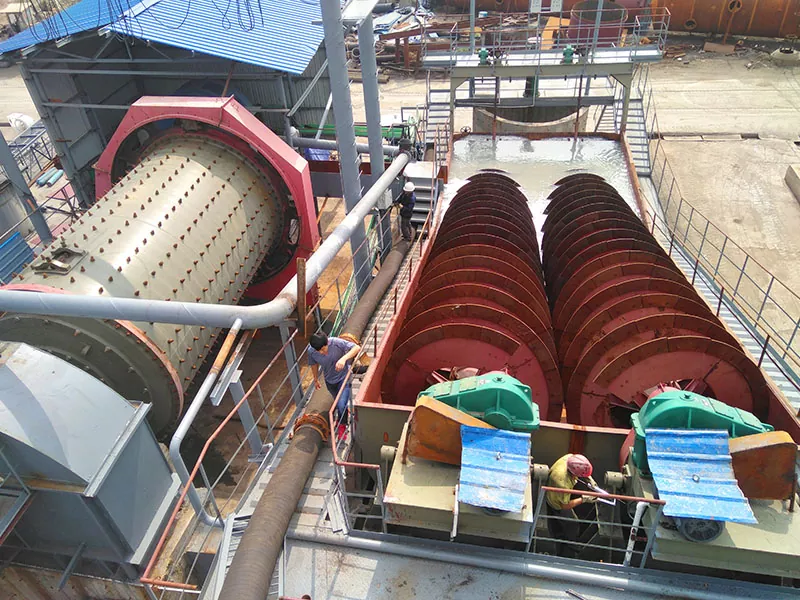
Table of Contents
- Introduction to Submerged Spiral Classifiers
- How Do Submerged Spiral Classifiers Work?
- Advantages of Using Submerged Spiral Classifiers
- Applications of Submerged Spiral Classifiers
- EPIC's Submerged Spiral Classifier Solutions
- FAQ
Introduction to Submerged Spiral Classifiers
Submerged spiral classifiers are used in various industries for the classification and separation of mineral particles based on their size, density, and other physical properties. They work by using a rotating spiral to move material in a water tank, where the heavier particles sink and the lighter ones are carried to the surface. This separation process helps increase the efficiency of mining operations, enabling better recovery of valuable minerals.
How Do Submerged Spiral Classifiers Work?
The submerged spiral classifier consists of a spiral mounted inside a large tank filled with water. As the spiral rotates, the material is fed into the tank, where gravity helps separate the particles. The spiral's rotation ensures that the finer materials move upwards while the coarser ones sink to the bottom, where they are collected. This separation process is crucial in the mining industry for producing clean and efficient output.
Advantages of Using Submerged Spiral Classifiers
- Cost-Effective: These classifiers are an affordable solution for separating and classifying materials.
- Simple Maintenance: They have a simple design, making them easy to maintain and repair.
- High Efficiency: The classifiers are highly efficient in separating materials of different densities and sizes.
- Durability: Made of robust materials, submerged spiral classifiers offer long-lasting service in harsh conditions.
- Flexible Application: Suitable for various industries including mining, construction, and environmental engineering.
Applications of Submerged Spiral Classifiers
Submerged spiral classifiers are used in a variety of industries to separate materials. Some of the key applications include:
- Mineral Processing: The most common use of submerged spiral classifiers is in the mining industry, where they are used to separate valuable minerals from waste material.
- Sand and Gravel Industry: These classifiers help separate sand and gravel by size, ensuring a uniform product.
- Chemical and Pharmaceutical Industries: They are also used for separating fine chemicals in powder form, ensuring high purity in products.
- Recycling: Used in sorting and classifying recyclable materials such as plastics, metals, and glass.
EPIC's Submerged Spiral Classifier Solutions
EPIC is a leading manufacturer of mining machinery, and our submerged spiral classifiers are known for their durability and efficiency. We design and manufacture classifiers that meet the needs of our customers across different industries. EPIC's spiral classifiers are tailored to ensure maximum separation efficiency while reducing maintenance costs. Whether you are processing minerals or recycling materials, EPIC offers solutions that can significantly improve your operations.
| Model | Capacity (tons/hr) | Diameter (mm) | Spiral Speed (r/min) |
|---|---|---|---|
| SPC-100 | 50 | 1000 | 25 |
| SPC-200 | 100 | 1500 | 20 |
| SPC-300 | 150 | 2000 | 18 |
FAQ
What is the difference between a submerged spiral classifier and a hydraulic classifier?
The main difference lies in the method of separation. A submerged spiral classifier uses a rotating spiral to move material in a water tank, while a hydraulic classifier uses water flow to separate materials based on their size and density. The submerged spiral classifier is typically more efficient and requires less space.
How do I maintain a submerged spiral classifier?
Maintenance of a submerged spiral classifier involves regular inspections to ensure the spiral mechanism is functioning smoothly. Check for any wear on the spiral, and ensure the tank is free from blockages. Periodically replace worn parts to ensure long-term performance.
What industries use submerged spiral classifiers?
Submerged spiral classifiers are used in a variety of industries, including mining, construction, sand and gravel, chemical, pharmaceutical, and recycling industries. They are crucial for efficiently separating materials of different sizes and densities.
What should I consider when choosing a submerged spiral classifier?
Consider factors like the capacity, material type, and required separation efficiency when selecting a submerged spiral classifier. EPIC offers a range of classifiers designed for different needs, ensuring you can find the ideal solution for your operation.
Conclusion
The submerged spiral classifier plays an essential role in improving the efficiency of mineral processing and separation operations across various industries. EPIC's cutting-edge solutions provide reliable and cost-effective machinery to meet the demands of your business. If you're looking for high-quality submerged spiral classifiers, contact us today to learn more about our offerings and how we can help optimize your processes.
Send Inquiry



X
We use cookies to offer you a better browsing experience, analyze site traffic and personalize content. By using this site, you agree to our use of cookies.
Privacy Policy