 English
 Español
  Português
  русский
  Français
  日本語
日本語  Deutsch
  tiếng Việt
  Italiano
  Nederlands
  ภาษาไทย
  Polski
  한국어
한국어  Svenska
  magyar
  Malay
Malay  বাংলা ভাষার
  Dansk
Dansk  Suomi
Suomi  हिन्दी
  Pilipino
  Türkçe
  Gaeilge
  العربية
  Indonesia
  Norsk
Norsk  تمل
تمل  český
český  ελληνικά
  український
  Javanese
  فارسی
فارسی  தமிழ்
தமிழ்  తెలుగు
  नेपाली
  Burmese
  български
  ລາວ
ລາວ  Latine
  Қазақша
  Euskal
  Azərbaycan
  Slovenský jazyk
  Македонски
  Lietuvos
  Eesti Keel
  Română
  Slovenski
  मराठी
मराठी  Srpski језик

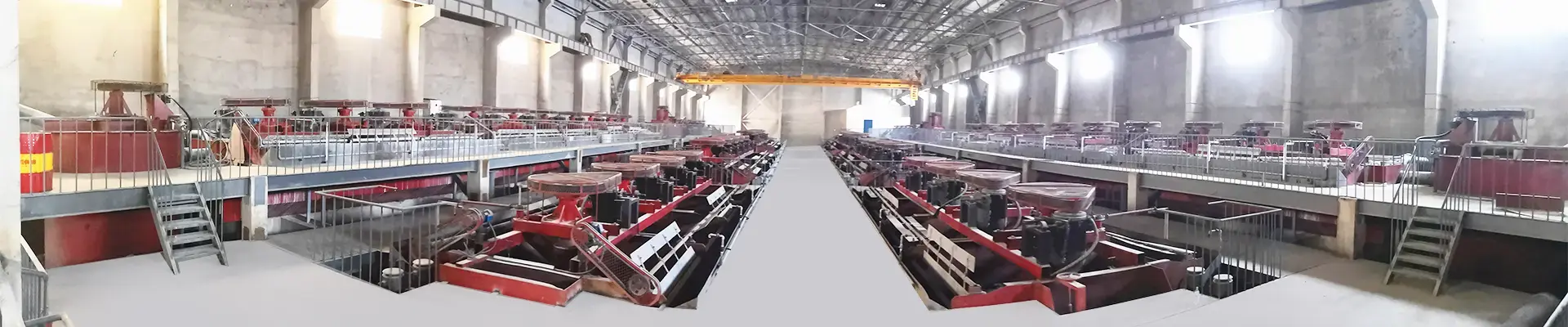
How Can an Ore Feeder Eliminate Crushing Plant Downtime?
Abstract
This article breaks down the most common pain points tied to ore feeding—bridging, surging, excessive wear, dust, and operator “guesswork”— and shows how to choose and operate an Ore Feeder that matches your ore characteristics and plant goals. You’ll learn practical selection rules, sizing questions to ask before purchasing, and daily operating habits that reduce stoppages. Along the way, you’ll see a clear comparison of feeder types, a troubleshooting checklist, and a set of FAQs you can share with your team.
Table of Contents
- Where does downtime really start?
- What does an ore feeder actually “control”?
- Which feeder style fits which ore?
- What should you confirm before selecting a feeder?
- How do you integrate the feeder with the rest of the line?
- What operating habits keep the feeder stable?
- How do you reduce wear and maintenance surprises?
- What are the fastest fixes when feeding goes wrong?
- FAQ
- Next steps
Outline
- Identify the real symptoms of poor feed control (beyond “the crusher is stopping”).
- Translate ore behavior into feeder requirements (rate, surge capacity, resistance to bridging).
- Match feeder type to ore size range, abrasiveness, moisture, and duty cycle.
- Confirm sizing data and layout constraints before committing.
- Operate and maintain for stability, safety, and predictable wear life.
Where does downtime really start?
When a plant stops, everyone looks at the biggest machine in the room. But many stoppages begin earlier—right at the moment ore leaves the hopper. If feeding surges or starves, the downstream system never gets a steady “heartbeat,” and you end up chasing problems that look unrelated:
- Crusher choking: sudden surges pack the chamber and trigger trips.
- Low throughput: operators run conservatively to avoid overload, leaving capacity unused.
- Screen inefficiency: uneven feed loads the deck in bursts, lowering separation quality.
- Conveyor spillage: surges exceed belt capacity and create cleanup labor.
- Unpredictable wear: impact and abrasion concentrate in short bursts, shortening part life.
A good question to ask is: “If I had perfectly even feed for a day, would my line hit targets?” If the answer is yes, you’ve found a high-value improvement point.
What steady feeding changes immediately
Stops caused by overload
Down
Crusher and screen stability
Up
Energy per ton
More consistent
Operator intervention
Reduced
The goal isn’t “maximum speed.” The goal is controlled feeding that keeps your line inside safe, efficient operating limits.
What does an ore feeder actually “control”?
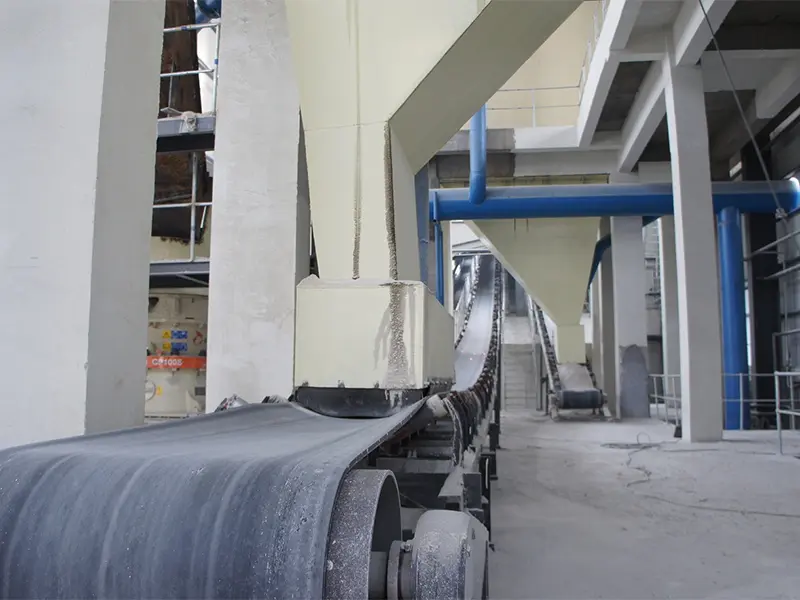
An Ore Feeder sits at a messy interface: bulk ore in a bin or hopper, and a process line that needs steady input. It typically controls three things at once:
- Rate: how many tons per hour enter the system.
- Uniformity: how smooth that flow remains minute to minute.
- Presentation: how the ore is delivered (spread across a belt, centered into a chute, or metered into a crusher).
Most “feeding problems” happen when ore doesn’t behave like a free-flowing material. Sticky fines, slabby rock, clay, moisture, and wide size distributions can cause bridging (an arch forms above the outlet) or rat-holing (material flows only through a central channel). The right feeder design reduces these behaviors by controlling withdrawal and resisting sudden surges.
Which feeder style fits which ore?
There’s no single best feeder—only the best match for your duty. Here’s a practical comparison you can use during early selection. (If you’re unsure, start with ore properties and duty cycle, not brand names.)
| Feeder Type | Best For | Strengths | Watch Outs |
|---|---|---|---|
| Apron Feeder | Very heavy duty, large lumps, high impact, abrasive rock | Handles shock loads, tough construction, steady draw from hoppers | Higher capex, needs strong foundation and alignment discipline |
| Belt Feeder | Metering more uniform material, controlled rate to conveyors or mills | Smooth flow, good for accurate rate control, simpler maintenance in many cases | Less tolerant of severe impact and very large sharp lumps without proper design |
| Vibrating Feeder (motor / double-mass / electromagnetic styles) | Pre-screening, controlled delivery, general duty feeding | Good for spreading, can pair with grizzly bars, helps “shake” fines and reduce bridging | Needs correct isolation and tuning; can transfer vibration if poorly installed |
| Grizzly Feeder | Scalping fines before crushing, reducing crusher load | Improves downstream performance by removing undersize early | Requires appropriate bar spacing and maintenance of wear surfaces |
One simple rule: the more your ore behaves like “random boulders and slabs,” the more you should prioritize impact resistance and a feeder that can tolerate rough withdrawal. The more your ore behaves like “consistent bulk,” the more you can prioritize metering accuracy.
What should you confirm before selecting a feeder?
The fastest way to buy the wrong Ore Feeder is to pick solely by capacity. Capacity matters, but it’s not the whole picture. Before you lock a design, confirm the items below (even if you need to do a quick site measurement or run a short material test):
- Ore size range: top size, typical size, and percentage of fines.
- Moisture and clay content: does it smear, pack, or form lumps?
- Abrasiveness: how quickly do liners, chute plates, and belts wear?
- Bulk density variation: does density change by bench, seam, or season?
- Required control: do you need “steady enough,” or do you need near-metered feed for blending?
- Hopper geometry: wall angles, outlet size, and available headroom.
- Duty cycle: occasional feeding versus continuous heavy operation.
A sizing mindset that avoids surprises
Don’t size only for today’s average. Size for your real worst-case operating day: wet ore, more fines, and an operator trying to keep the plant alive. If the feeder remains stable on the worst day, your “normal day” becomes easy.
Teams often underestimate the hopper’s role. A feeder can’t fix a hopper that constantly bridges unless the withdrawal pattern and bin design support mass flow or controlled draw. If bridging is frequent, treat it as a system issue: hopper angles, liner friction, outlet size, and feeder interface.
How do you integrate the feeder with the rest of the line?
Your feeder is only as good as its installation details. Integration is where many “good machines” become frustrating machines. Focus on these practical items:
- Surge capacity: give the feeder a stable supply so it can meter smoothly, not constantly “gulp.”
- Chute design: avoid tight corners and dead zones where ore packs; use replaceable wear liners.
- Spillage control: skirt boards, sealing, and correct transfer point geometry reduce cleanup and belt damage.
- Control strategy: tie feeder speed (or amplitude) to downstream load signals to prevent overload trips.
- Access and safety: leave room for inspection, liner change, and safe isolation/lockout.
In practice, the most reliable plants treat feeding as a “closed loop”: the feeder doesn’t run blindly; it responds to crusher power draw, conveyor load, or bin levels so the whole line stays balanced.
What operating habits keep the feeder stable?
A stable Ore Feeder is as much about daily habits as it is about hardware. Here are operator-friendly practices that reduce stoppages without slowing the whole plant:
- Start low, then ramp: bring the system to steady state before pushing rate.
- Avoid “panic surges”: when the crusher starves, don’t instantly jump to max feed—build back gradually.
- Keep the hopper consistent: irregular dumping patterns often cause the worst surges.
- Watch for early warning signs: unusual vibration tone, sudden amperage spikes, or repeated small spills.
- Record reality: note ore conditions and issues by shift; patterns show up fast when logged.
A small habit with a big payoff
Make one person responsible for a 2-minute “feeder walk-around” each shift: check guards, look for abnormal dust, listen for new noises, and confirm fasteners aren’t loosening. It’s boring—right until it saves a lost production day.
How do you reduce wear and maintenance surprises?
Wear is unavoidable in mining. Surprises are not. The goal is to turn wear into a planned activity. Here’s what typically gives the best return:
- Protect the first contact points: liners and impact zones take the hit—design them to be replaceable.
- Control speed: higher speed often means higher wear; aim for stable flow, not aggressive flow.
- Keep alignment tight: misalignment accelerates belt edge wear, chain issues, and bearing load.
- Standardize spares: critical parts should be on-hand (not “available from a supplier somewhere”).
- Maintain sealing and housekeeping: dust and spillage don’t just look bad—they shorten component life.
If you’re fighting chronic stoppages, maintenance should also include upstream checks: bin liners, buildup, and the ore’s moisture variation. Many “mechanical failures” are actually process symptoms.
What are the fastest fixes when feeding goes wrong?
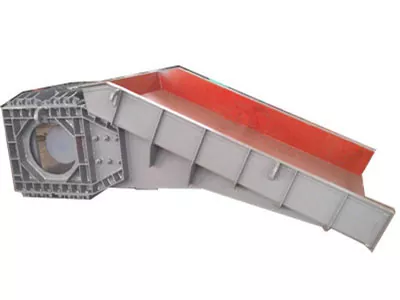
When feed control fails, speed matters. Use this checklist to isolate the cause before you start swapping parts.
| Symptom | Likely Cause | Fast, Practical Actions |
|---|---|---|
| Feeder starves while hopper looks “full” | Bridging or rat-holing | Inspect hopper outlet; reduce top-size segregation; consider flow aid or redesign of outlet/liners |
| Sudden surges overload crusher | Inconsistent dumping or poor control response | Stabilize dumping pattern; tune control ramp; verify sensors and signals |
| Excessive spillage at transfer | Chute geometry, misalignment, or over-capacity bursts | Check alignment; adjust skirting; reduce surge; improve chute liner layout |
| Abnormal vibration/noise | Loose fasteners, worn supports, imbalance, or mounting issues | Stop safely; inspect mounts; torque fasteners; check wear surfaces and isolation |
| Wear parts failing “too soon” | Impact concentration and speed too high | Reduce drop height; add impact protection; optimize speed and feed presentation |
FAQ
How do I know whether I need heavy-duty feeding or metering accuracy?
Start with your ore: large, sharp, high-impact rock usually pushes you toward heavy-duty designs; more uniform bulk with tighter process targets pushes you toward smoother metering. If your biggest losses are overload trips, prioritize rugged stability first.
How do I reduce bridging without redesigning the whole hopper?
First confirm whether bridging is caused by moisture/clay or by geometry. Practical steps include improving liner friction, stabilizing dumping patterns, reducing oversize segregation, and ensuring the feeder withdraws in a way that promotes consistent flow.
How much surge capacity should I allow above my target rate?
Enough to absorb normal variation without forcing operators to “chase” the line. Many plants benefit from a buffer that prevents short-term spikes from reaching the crusher. Your control logic can then react smoothly instead of abruptly.
How do I protect downstream equipment with the feeder?
Use controlled ramping, stable feed presentation, and a load-responsive strategy. The feeder is your first “gatekeeper” against the cost of shock loading and excessive peaks.
How do I make sure the supplier understands my real conditions?
Provide the “worst day” story: wet season behavior, maximum lump size, percentage of fines, and where downtime happens. Photos and short shift logs are surprisingly useful. A good supplier will ask about ore behavior and installation constraints—not just capacity.
Next steps
A reliable Ore Feeder is one of the highest-leverage upgrades you can make because it improves everything downstream: crusher stability, screening efficiency, conveyor cleanliness, and maintenance predictability. If you want a selection that matches your ore conditions and layout, teams at Qingdao EPIC Mining Machinery Co.,Ltd. can help you translate real material behavior into a feeder configuration you can run confidently—day after day.
Ready to stabilize your feed and cut unplanned stops?
Share your ore size range, moisture/clay notes, target throughput, and a quick sketch (or photos) of your hopper and transfer points—then contact us for a practical recommendation and quotation that fits your site reality.
Send Inquiry



X
We use cookies to offer you a better browsing experience, analyze site traffic and personalize content. By using this site, you agree to our use of cookies.
Privacy Policy