 English
 Español
  Português
  русский
  Français
  日本語
日本語  Deutsch
  tiếng Việt
  Italiano
  Nederlands
  ภาษาไทย
  Polski
  한국어
한국어  Svenska
  magyar
  Malay
Malay  বাংলা ভাষার
  Dansk
Dansk  Suomi
Suomi  हिन्दी
  Pilipino
  Türkçe
  Gaeilge
  العربية
  Indonesia
  Norsk
Norsk  تمل
تمل  český
český  ελληνικά
  український
  Javanese
  فارسی
فارسی  தமிழ்
தமிழ்  తెలుగు
  नेपाली
  Burmese
  български
  ລາວ
ລາວ  Latine
  Қазақша
  Euskal
  Azərbaycan
  Slovenský jazyk
  Македонски
  Lietuvos
  Eesti Keel
  Română
  Slovenski
  मराठी
मराठी  Srpski језик

How Do Metal Detectors Shape Detection Accuracy in Security, Industry, and Exploration?
Abstract
Metal detectors play a critical role across security screening, industrial quality control, geological exploration, and public safety. This article provides a comprehensive, technically grounded analysis of metal detector systems, focusing on how detection principles, hardware parameters, and signal-processing technologies influence accuracy and reliability. It also explains how modern metal detectors adapt to different application environments, addresses common operational questions, and outlines future development directions in a structured, professional format aligned with global search behavior and technical reading habits.
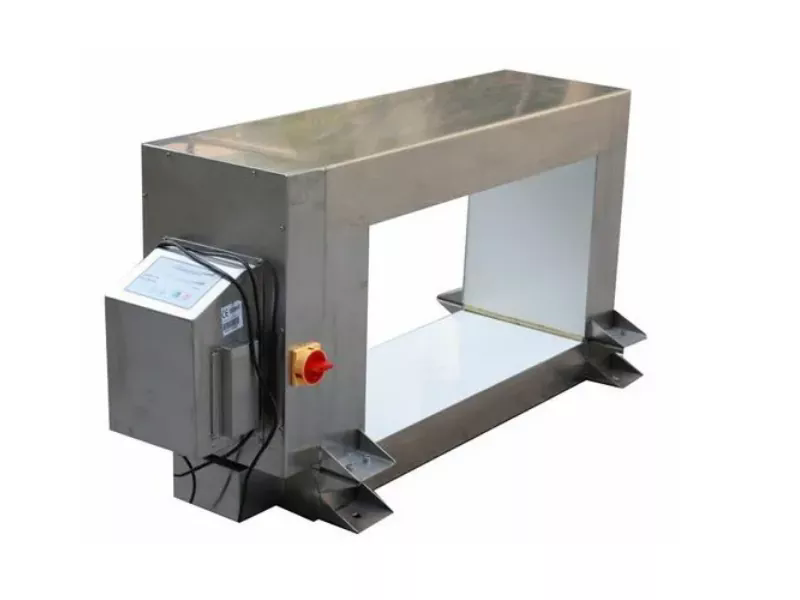
Table of Contents
- 1. How Do Metal Detectors Work in Real-World Detection Environments?
- 2. How Are Metal Detector Parameters Defined and Optimized?
- 3. How Are Metal Detectors Applied Across Industries?
- 4. How Will Metal Detectors Evolve With Emerging Technologies?
1. How Do Metal Detectors Work in Real-World Detection Environments?
A metal detector is an electronic instrument designed to identify the presence of metallic objects by generating and analyzing electromagnetic fields. When a conductive or ferromagnetic material enters the detection zone, it disrupts the emitted field, producing a measurable signal change that the system interprets as metal presence.
Most metal detectors operate using one of three core technologies: Very Low Frequency (VLF), Pulse Induction (PI), or Beat Frequency Oscillation (BFO). VLF systems rely on continuous sine-wave transmission and phase-shift analysis, making them suitable for high-sensitivity discrimination. PI systems emit powerful pulses and measure decay responses, enabling stable performance in mineralized or high-interference environments. BFO systems, while simpler, are primarily used in entry-level applications.
In professional environments, signal stability, electromagnetic shielding, and digital filtering are critical. Advanced metal detectors integrate microprocessors that analyze signal amplitude, frequency deviation, and response timing to reduce false positives caused by environmental noise, temperature variation, or nearby electronic equipment.
2. How Are Metal Detector Parameters Defined and Optimized?
Metal detector performance is determined by a combination of electrical, mechanical, and software-defined parameters. These parameters must be carefully matched to the intended application to ensure accuracy, repeatability, and operational efficiency.
| Parameter | Technical Description | Operational Impact |
|---|---|---|
| Detection Sensitivity | Minimum metal mass detectable at a defined distance | Higher sensitivity improves small-object detection but increases noise susceptibility |
| Operating Frequency | Electromagnetic transmission frequency range | Lower frequencies penetrate deeper; higher frequencies improve resolution |
| Detection Depth | Maximum effective sensing distance | Determines suitability for surface or subsurface detection |
| Discrimination Mode | Ability to classify metal types based on response | Reduces unwanted alerts in mixed-metal environments |
| Environmental Tolerance | Resistance to temperature, humidity, and EMI | Ensures stable operation in industrial and outdoor settings |
Parameter optimization typically involves balancing sensitivity against stability. Industrial metal detectors prioritize consistency and repeatability, while security screening systems emphasize rapid response and high throughput. Exploration-grade detectors focus on depth penetration and mineral interference compensation.
3. How Are Metal Detectors Applied Across Industries?
Metal detectors are deployed in a wide range of professional contexts, each with unique technical requirements and regulatory considerations.
In security and access control, walk-through and handheld metal detectors are used at airports, government facilities, and public venues. These systems require rapid detection cycles, standardized alarm thresholds, and compliance with safety and privacy standards.
In industrial manufacturing, metal detectors protect processing equipment and ensure product quality by identifying metal contamination in raw materials or finished goods. Integration with conveyor systems and automated rejection mechanisms is common.
In geological and environmental exploration, metal detectors assist in mineral prospecting, archaeological surveys, and unexploded ordnance detection. These applications demand deep penetration capability and advanced ground-balancing algorithms.
Across all sectors, system calibration, operator training, and routine maintenance directly influence detection reliability and long-term performance.
Common Metal Detector Questions and Detailed Answers
Q: How does a metal detector differentiate between metal types?
A: Differentiation is achieved by analyzing signal phase shift, conductivity response, and decay characteristics. Advanced detectors use digital signal processing to classify metals based on known electromagnetic signatures.
Q: Why do metal detectors produce false alarms?
A: False alarms often result from electromagnetic interference, mineralized ground conditions, or improper sensitivity settings. Proper calibration and environmental compensation significantly reduce these occurrences.
Q: How often should a metal detector be calibrated?
A: Calibration frequency depends on usage intensity and environment. Industrial and security systems typically require scheduled calibration to maintain compliance and detection accuracy.
4. How Will Metal Detectors Evolve With Emerging Technologies?
The future of metal detector technology is shaped by advances in digital electronics, artificial intelligence, and materials science. Modern systems increasingly incorporate adaptive algorithms that learn from environmental data to improve detection reliability over time.
Miniaturization of components allows for lighter, more portable devices without sacrificing performance. Improved battery technologies extend operational time, while wireless connectivity enables remote monitoring and centralized data analysis.
Integration with multi-sensor platforms, such as imaging and chemical detection systems, is expanding the functional scope of metal detectors. These developments support higher situational awareness in security and industrial applications.
As regulatory standards evolve and detection requirements become more stringent, metal detector design will continue to emphasize precision, traceability, and system interoperability.
Conclusion and Brand Introduction
Metal detectors remain indispensable tools for security, industry, and exploration due to their proven reliability and adaptability. By understanding operating principles, technical parameters, and application-specific requirements, organizations can select systems that deliver consistent, high-accuracy results.
EPIC provides professionally engineered metal detector solutions designed to meet demanding operational standards across global markets. With a focus on technical integrity, system stability, and long-term value, EPIC supports clients seeking dependable detection performance.
For tailored solutions, detailed specifications, or technical consultation, please contact us to discuss how EPIC metal detector systems can support your operational requirements.
Send Inquiry



X
We use cookies to offer you a better browsing experience, analyze site traffic and personalize content. By using this site, you agree to our use of cookies.
Privacy Policy