 English
 Español
  Português
  русский
  Français
  日本語
日本語  Deutsch
  tiếng Việt
  Italiano
  Nederlands
  ภาษาไทย
  Polski
  한국어
한국어  Svenska
  magyar
  Malay
Malay  বাংলা ভাষার
  Dansk
Dansk  Suomi
Suomi  हिन्दी
  Pilipino
  Türkçe
  Gaeilge
  العربية
  Indonesia
  Norsk
Norsk  تمل
تمل  český
český  ελληνικά
  український
  Javanese
  فارسی
فارسی  தமிழ்
தமிழ்  తెలుగు
  नेपाली
  Burmese
  български
  ລາວ
ລາວ  Latine
  Қазақша
  Euskal
  Azərbaycan
  Slovenský jazyk
  Македонски
  Lietuvos
  Eesti Keel
  Română
  Slovenski
  मराठी
मराठी  Srpski језик

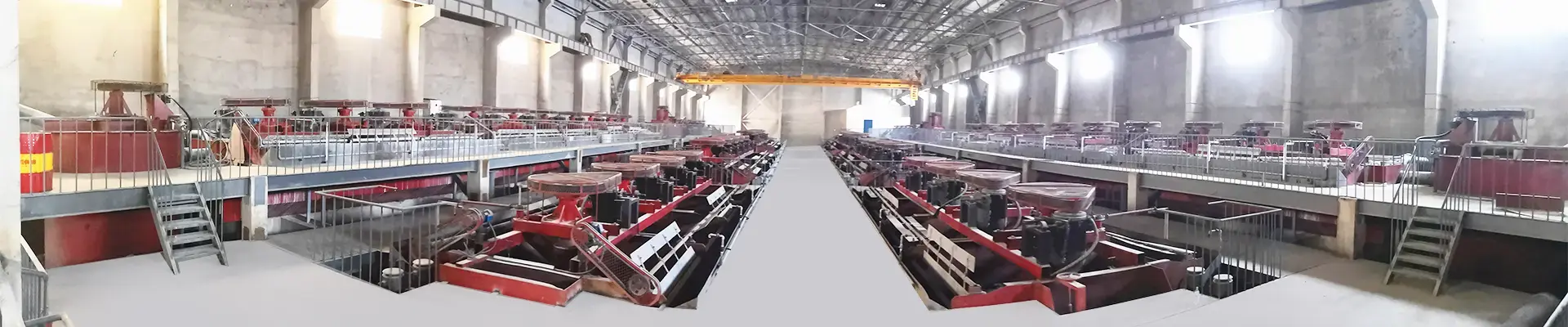
How Does a Cylindrical Froth Flotation Cell Deliver Higher Recovery and Cleaner Concentrate?
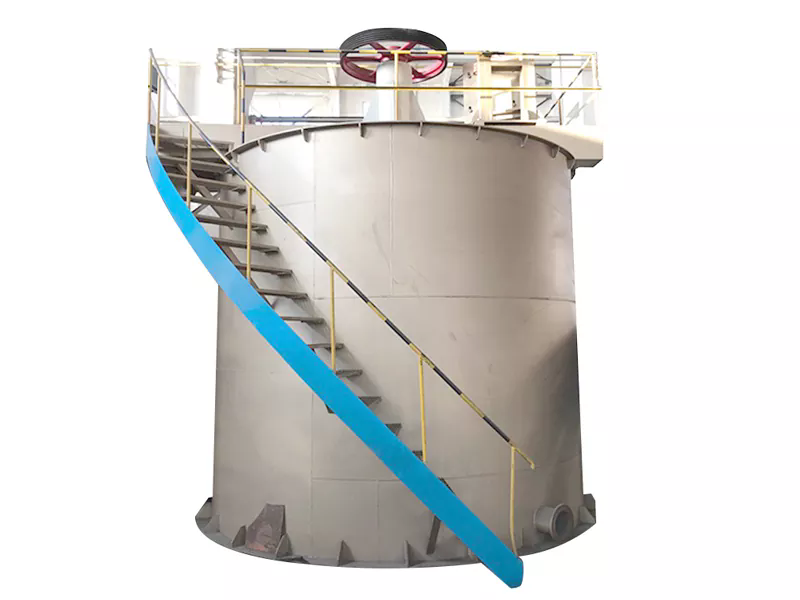
A cylindrical froth flotation cell is a highly engineered mineral-processing unit designed to separate valuable minerals from gangue through controlled aeration, agitation, and froth stabilization. Its cylindrical geometry improves air dispersion, enhances bubble–particle collision efficiency, and ensures uniform slurry circulation—ultimately increasing recovery rates and reducing operational losses.
Technical Specifications & Functional Advantages
Technical Parameters of Cylindrical Froth Flotation Cell
| Specification | Description |
|---|---|
| Cell Geometry | Fully cylindrical tank with optimized height–diameter ratio |
| Working Volume | 0.5 m³ – 50 m³ (customizable) |
| Air Dispersion System | Micro-bubble generator; adjustable aeration rate |
| Impeller Speed | 200–1500 RPM depending on model |
| Froth Depth Control | Automatic servo-controlled froth level modules |
| Slurry Feed Pressure | 0.05–0.5 MPa |
| Power Consumption | 5–75 kW (energy-efficient motor options available) |
| Materials | High-grade stainless steel, polyurethane lining, corrosion-resistant alloys |
| Automation | PLC monitoring, real-time density sensors, froth cameras |
| Application Range | Copper, gold, nickel, zinc, coal, rare earths, industrial minerals |
How the Design Improves Flotation Output
A cylindrical cell does more than reshape the tank; it reshapes performance. Its geometry eliminates dead zones, encourages uniform bubble rise, and reduces turbulence at the froth interface. The result is:
-
Higher mineral recovery due to improved bubble–particle attachment
-
Cleaner concentrate through enhanced froth stability
-
Lower reagent consumption from more efficient mixing
-
Reduced energy usage through smoother hydrodynamics
-
Extended equipment life thanks to balanced wear distribution
How Does the Cylindrical Structure Enhance Efficiency?
The cylindrical structure creates a consistent radial flow pattern. This uniformity ensures that every particle receives equal flotation opportunity, minimizing bypass and maximizing contact probability. Air distribution occurs vertically and evenly, producing fine bubbles that increase surface area for attachment.
How Air Dispersion and Froth Management Improve Output?
Controlled aeration regulates bubble size, while intelligent froth level systems prevent mineral loss in overflowing froth. Stable froth means higher-grade concentrate and less entrainment of impurities.
Key Functional Insights & Deep-Dive “How” Questions
How Does Impeller–Baffle Coordination Shape the Froth Zone?
The impeller’s rotation generates turbulent zones where attachment occurs, while the cylindrical baffle structure stabilizes flow at higher levels. Together, they:
-
Reduce detachment of mineralized particles
-
Maintain laminar ascent of froth
-
Decrease slurry splashing and mechanical loss
How Do Automated Controls Increase Operational Stability?
Advanced control systems analyze:
-
Froth color
-
Bubble size
-
Slurry density
-
pH and reagent concentration
Real-time adjustments tune air flow, frother dosage, and impeller speed to sustain ideal flotation conditions even when ore characteristics fluctuate.
How Does the Cylindrical Cell Reduce Maintenance Costs?
Because wear distributes evenly around the circular wall, no single area suffers excessive abrasion. This symmetry:
-
Extends lining life
-
Reduces shutdown frequency
-
Keeps maintenance predictable
How Can Cylindrical Cells Adapt to Varying Ore Types?
Flexible parameter settings allow operators to switch between sulfide ores, oxidized minerals, fine particles, and coarse feeds. The cell’s architecture supports both high-grade and high-recovery strategies.
Future Trends and Market Outlook
How Will Flotation Technology Evolve in the Next Decade?
Several converging trends indicate that cylindrical flotation cells will play a central role in future mineral processing:
1. Digitalization & Predictive Intelligence
Expect wider adoption of:
-
AI-enhanced froth vision systems
-
Predictive maintenance algorithms
-
Self-tuning reagent dosing modules
-
Real-time metallurgical dashboards
These advancements will reduce operator burden while improving accuracy in process control.
2. Sustainability-Driven Engineering
Future cylindrical cells will focus on:
-
Lower water usage
-
Ultra-low energy impellers
-
Recovered-air systems to reduce emissions
-
Eco-friendly and biodegradable reagents
Cleaner mining practices will increasingly influence flotation technology development.
3. High-Recovery Fine Particle Solutions
As ore grades decline globally, the ability to float micron-size particles becomes crucial. Cylindrical cells will integrate:
-
High-shear micro-bubble generators
-
Nanobubble infusion systems
-
Multi-stage froth washing
These innovations will significantly improve the flotation of fine ores.
4. Modular & Scalable Plant Layouts
Cylindrical cells will increasingly adopt plug-and-play modular designs, enabling:
-
Faster installation
-
Compact plant footprints
-
Simplified field upgrades
As mining operations expand or relocate, modularity ensures long-term adaptability.
Common Questions About Cylindrical Froth Flotation Cells
Q1: How does a cylindrical flotation cell differ from a traditional rectangular or U-shaped cell?
A1: A cylindrical cell eliminates sharp corners and stagnant zones, ensuring smooth hydrodynamic circulation. This creates a more consistent bubble residence time, stabilizes the froth layer, reduces energy loss, and provides higher recovery compared to traditional geometries.
Q2: How does bubble size control influence recovery and grade?
A2: Bubble size is critical because fine bubbles offer increased surface area for particle attachment. Controlling bubble size ensures that coarse particles are carried efficiently while fine particles float without excessive entrainment. This balance directly impacts both the recovery rate and the quality of the concentrate.
Application Scenarios & Industry Alignment
How Does This Technology Support High-Demand Industries?
Mining & Metallurgy
Producing cleaner sulfide concentrates at lower cost ensures competitive smelter performance. Cylindrical cells support both bulk and selective flotation circuits.
Critical Minerals Processing
Rare earths, lithium ores, and strategic minerals require precise bubble–particle behavior. Cylindrical chambers provide the control required for modern strategic-resource mining.
Coal Beneficiation
Fine coal flotation benefits from micro-bubble attachment and stable froth management, resulting in lower ash content and improved calorific value.
Industrial Minerals
Flotation of feldspar, graphite, phosphate, and silica relies on consistent hydrodynamics—an area where cylindrical cells excel.
Strategic Value & Brand Positioning
How Does EPIC Strengthen Industrial Outcomes?
EPIC delivers cylindrical froth flotation cells built to global engineering standards. Precision manufacturing, custom parameter configurations, and robust automation options make each unit reliable, scalable, and performance-optimized. Industries choosing EPIC gain durability, efficiency, and expert technical support across all stages of installation, commissioning, and long-term operation.
For tailored solutions, technical consultation, or customized flotation cell design, contact us to explore how EPIC can support your mineral-processing goals.
Send Inquiry



X
We use cookies to offer you a better browsing experience, analyze site traffic and personalize content. By using this site, you agree to our use of cookies.
Privacy Policy